What Is a Plagiarism Checker
A plagiarism checker is a software application that compares a given text against a database of existing content to identify duplicated or closely copied passages. It scans for verbatim matches, near-verbatim matches, and sometimes paraphrased content that closely mirrors a source. The tool produces a report indicating similarity percentages and, when available, links to matched sources. Plagiarism checkers are used in academic settings, publishing, journalism, and content creation to verify originality before submission or publication.
The core function is straightforward: input text is broken into segments, each segment is compared against an indexed corpus (web pages, academic papers, books, or proprietary databases), and matches are flagged. The output typically includes an overall similarity score and a breakdown by source. Some tools highlight matched passages directly in the submitted text. The breadth and depth of the database, along with the matching algorithm, determine how comprehensive the check is.
Plagiarism checkers differ from citation generators and grammar tools. A citation generator helps you format references; a grammar checker corrects errors. A plagiarism detector focuses solely on originality — whether the text overlaps with existing published or unpublished content. Many writers use all three: write and cite properly, fix grammar, then run a final plagiarism check before submission.

How Plagiarism Detection Works
Plagiarism detection relies on text-matching algorithms. The submitted document is tokenized into phrases, sentences, or n-grams (fixed-length word sequences). Each unit is hashed or fingerprinted and compared against an index of previously seen content. When a match exceeds a similarity threshold, it is reported. The index may include publicly crawled web pages, academic databases such as ProQuest or Crossref, and in some cases user-submitted papers stored for future comparison.
Exact matches are easiest to detect. A string of words identical to a source will trigger a flag. Near-matches — where a few words differ or word order is slightly altered — require fuzzy matching or semantic similarity techniques. Advanced systems use natural language processing to identify paraphrased content that retains the same structure or key phrases. No system catches every form of copying; clever paraphrasing, translation, or use of obscure sources can evade detection.
AI-powered plagiarism checkers may supplement traditional matching with pattern analysis. They can identify stylistic inconsistencies that suggest pasted material, flag unusual phrasing that appears in known sources, or cross-reference against larger corpora. The goal remains the same: surface potential overlaps so a human can assess whether attribution is needed or misconduct has occurred.
Different tools offer different database coverage. Web-based checkers typically index publicly accessible pages. Academic-focused tools may integrate with journal repositories and student paper databases. The more comprehensive the index, the higher the likelihood of finding matches — but also the higher the chance of flagging legitimate common phrases or properly cited material. Interpreting results requires context.
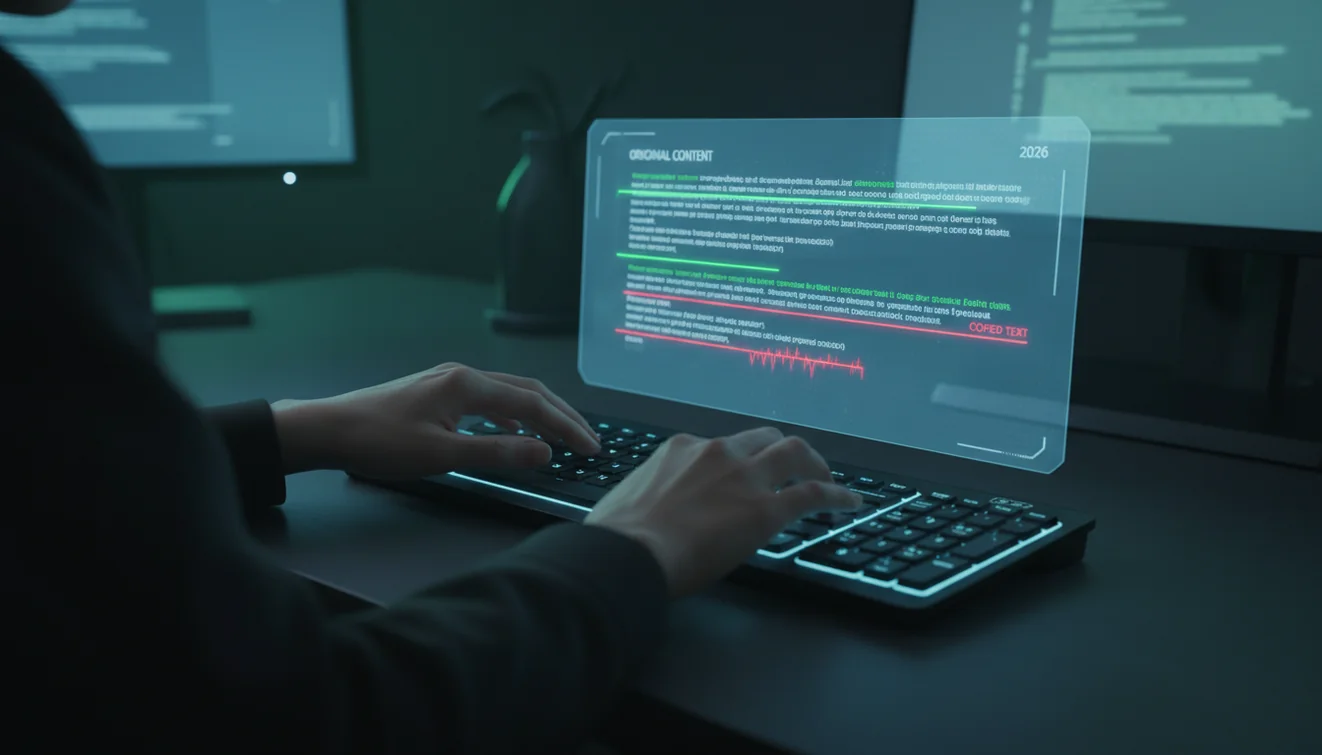
When to Use a Plagiarism Checker
Students use plagiarism checkers before submitting essays, theses, or research papers to ensure they have not inadvertently copied without citation. Educators use them to verify student work. Publishers and editors check manuscripts to avoid publishing plagiarized content. Content marketers and bloggers verify that drafts are original before publication. Freelancers may run client work through a checker to confirm no uncredited copying.
Running a check before submission is a preventive measure. It catches accidental plagiarism — forgotten quotation marks, improperly paraphrased sources, or copy-pasted sections that were meant to be rewritten. It also helps writers understand how their work compares to existing content and whether additional citation or revision is needed. In contexts where originality is strictly enforced, a pre-submission check reduces risk and builds confidence.
Combining a plagiarism checker with an AI Detector is increasingly common. Plagiarism detection addresses copying from existing sources; AI detection addresses text generated by language models. A document can be original in the plagiarism sense (no copied passages) but entirely AI-generated. Institutions and publishers may require both checks. The AI Checker identifies machine-generated content; the plagiarism checker identifies borrowed content.

Limitations of Plagiarism Checkers
Plagiarism checkers have significant limitations. No tool has access to all published or unpublished content. Paywalled journals, books, private documents, and non-indexed web pages may not be in the database. Content copied from those sources can go undetected. Conversely, properly cited quotations or common phrases may be flagged as matches even when attribution is correct. The similarity percentage alone does not distinguish between acceptable use and misconduct.
Paraphrasing can evade basic checkers. If a writer rewrites a source in their own words while retaining the same structure or key ideas, simple string-matching may miss it. Sophisticated paraphrasing detection exists but is not perfect. Translation is another blind spot: text copied from a source in another language and then translated may not match the original in the index. Manual review remains essential for high-stakes assessments.
Database policies matter. Some free tools add submitted text to their databases. If a student checks a draft and the tool stores it, a later submission of the same work by another student might match the first. This can create false positives or privacy concerns. Users should read each tool's terms and privacy policy. For sensitive or unpublished work, choose a checker that does not retain submissions.
Finally, a plagiarism checker cannot judge intent. It reports matches; it does not determine whether copying was deliberate or accidental, or whether the use falls under fair use. A high similarity score might reflect extensive quotation with proper attribution. A low score does not guarantee ethical conduct — it only means the tool found no matches in its database. Human judgment is irreplaceable.